
Beyond the Disaster of Art.
Under contemporary regimes of domination, what circulates under the name art operates within a field in which negativity is seemingly anticipated, captured, and neutralised almost at the instant of its appearance. Refusal, opacity, formal autonomy, even gestures of self-sublation lose operational force as the configuration of power folds negation into its own procedures. The administered world metabolises aesthetic negativity, turning critique into credential, refusal into style, and dissent into a category of institutional legibility, as part of a long neoliberal lineage that has become increasingly totalising, ubiquitous, and infrastructural—rendering domination everywhere and nearly invisible. The failures of the art world are thus symptomatic: the political spectacle of the biennale, the long-critiqued white cube, the circulation of “institutional critique” and “political art” as moral credential within neoliberal virtue economies. The “death of art” names this condition—a death perpetually diagnosed by art’s own pharmakon. It resembles what Blanchot calls disaster: a disappearance that ruins everything while leaving everything intact, a state in which “there neither is, nor is not, disaster.” The contemporary milieu is painfully self-aware of this eschatological saturation; art endures the disaster as a mode of being. Adornian and post-Adornian understandings of autonomy—art as negative, self-sublating, eschatologically aware, institutionally reflexive—still structure this milieu at a deep level, even as the field overlays this grammar with the language of democracy, care, and social justice. This mismatch produces a contradiction in which art remains withdrawn in form and structure while presenting itself as socially motivated, leaving it in a mode of bad faith, an unresolved operational impasse in which autonomy is still secured at the level of form while the operations capable of altering conditions of life now unfold elsewhere.
The dominant ideology of contemporary art in this post-conceptual and post-Adornian present no longer sets autonomy against the culture industry, but recodes critique as professional competence, politics as a spectacle of concern, autonomy as residual formalism, and reflexivity as institutional self-insurance. Neoliberal criticality, ethical and political rhetoric, research discourse, and curated crisis converge into a single regime in which art’s languages of distance, care, and radicality function less as resistance to domination than as the means by which it is continuously reproduced. Taken at face value, this configuration appears to confirm the impasse: autonomy is preserved only as aesthetic distance, while anything like social efficacy is displaced into the realm of representation. Yet this opposition is not inevitable; it depends on a specifically art-theoretical conception of autonomy. If we turn instead to critical psychological accounts of autonomy—as the capacity to direct one’s life in and with others—autonomy appears not as separation from the social but as the collective production of conditions under which self-direction becomes possible at all: dissensual configurations. Autonomy is produced in common, appearing wherever bodies act together to reorganise the sensible field: who may dwell, who may move, who may rest, who may appear. From this vantage, the category “art” becomes increasingly incoherent as a descriptive framework for the forces it once claimed to contain. What comes into view instead are operational qualities that traverse contexts: the reorganisation of relations, temporality, and exposure through collective resistance and the unworking of violent structures—an autonomy inseparable from shared negativity rather than opposed to it. In this light, the “death” or disaster of art loses its centrality: it appears less as a terminal crisis to be endlessly narrated than as a local symptom of a broader displacement, in which the operative sites of autonomy and negation exist in civil practices of interruption and refusal, rendering the field unmistakably post-eschatological.
Civil Negativity.
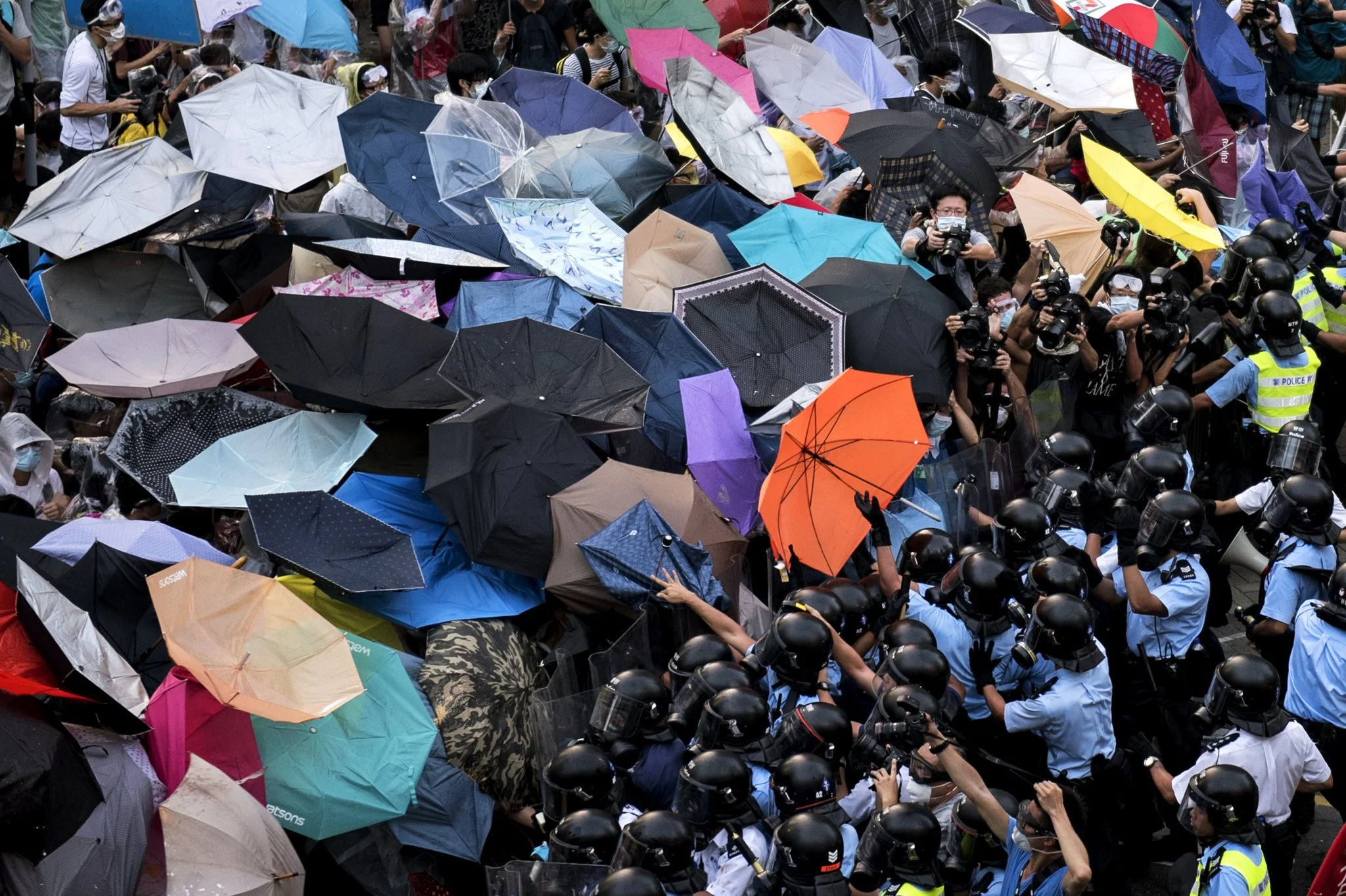
Against the disastrous eschatology of art’s death, civil negativity names the social operation of negation as it is enacted in and through civil life rather than as representation or distance. It designates a shifting field in which appearance, exposure, and the protocols that organise circulation, movement, and compliance are collectively interrupted and reorganised, so that sociality and negativity synthesise each other as a shared, dissensual capacity that disrupts the distributed sensible order. In this sense it sketches a neo-Situationist, post-Adornian dialectics: an Azoulay–Rancière redistribution of the civil sensible in which the operative sites of autonomy and negation exist across contexts and visibilities rather than being contained by the category of art. Civil negativity does not describe a genre, tactic, or form; it marks the unstable zone where doing and meaning contaminate one another, and where visibility, opacity, and withdrawal are mobilised as situational ways of unworking domination.
Read in this register, the dissolution of the Situationist International is not a punctual break but an isomorphic instance of the same eschatological logic: a parergonal disaster in which a form declares its own impossibility while its procedures diffuse into the operational fabric of social life. What is called “their death” names less a finished episode than a mode of circulation whereby dérive, détournement, and anti-spectacular obstruction reappear as dispersed, recomposed functions within heterogeneous struggles without requiring a continuous lineage or recognisable authorship. The SI figures, in other words, one historical condensation of a more general dynamic by which avant-garde negation loses the purity of its frame and persists as civil interferences; Hong Kong’s lasers and umbrellas, the ZAD’s slow architectures of refusal, and countless configurations that can be read not as descendants but as other articulations of this aesthetic force that exist in the protocols, materials, and tempos of resistance.